
Between Sessions
Healing continues well beyond the table — in the small, steady ways you
care for yourself each day.
Your healing doesn't end when your session does — it continues in the small, daily ways you care for yourself. This page is your toolkit and your resource hub — stretches, practices, wellness wisdom, and guidance to deepen and maintain the work we do together. Discover new ways to care for your body and explore deeper wellness practices. Everything here is designed to support your transformation between sessions and beyond.
5 Foundational Stretches.
Chosen with intention — each one targets the muscles most responsible for chronic holding patterns and compensations that nearly everyone develops over time.
The pectorals, neck, psoas, shoulders, and subscapularis are where the body quietly collects tension from posture, stress, and the demands of daily life. Learning to care for these specific areas resolves many of the issues people experience.
Stretch ONLY to the point of resistance — not beyond. At that gentle edge, hold for three deep breaths, then gently reset to a neutral position. This matters: pushing past resistance triggers a protective chemical response designed to prevent injury, and the muscle guards and tightens rather than releases. True release happens at that sweet spot, not beyond.
Hold each position for 3 DEEP breaths! Repeat stretches several times daily and as needed. Frequent, gentle stretching is more effective — and safer — than forcing a deeper stretch all at once. This principle applies to all 5 foundational stretches.
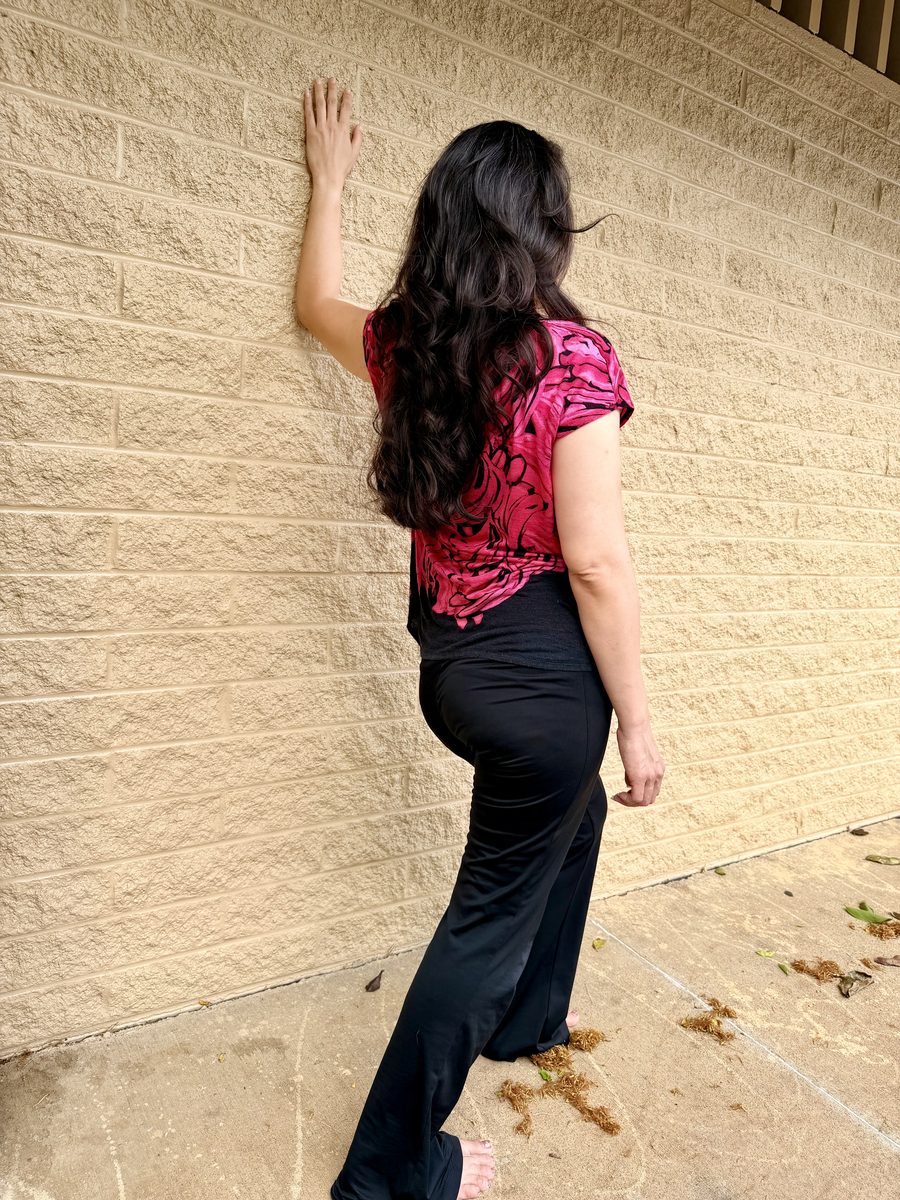
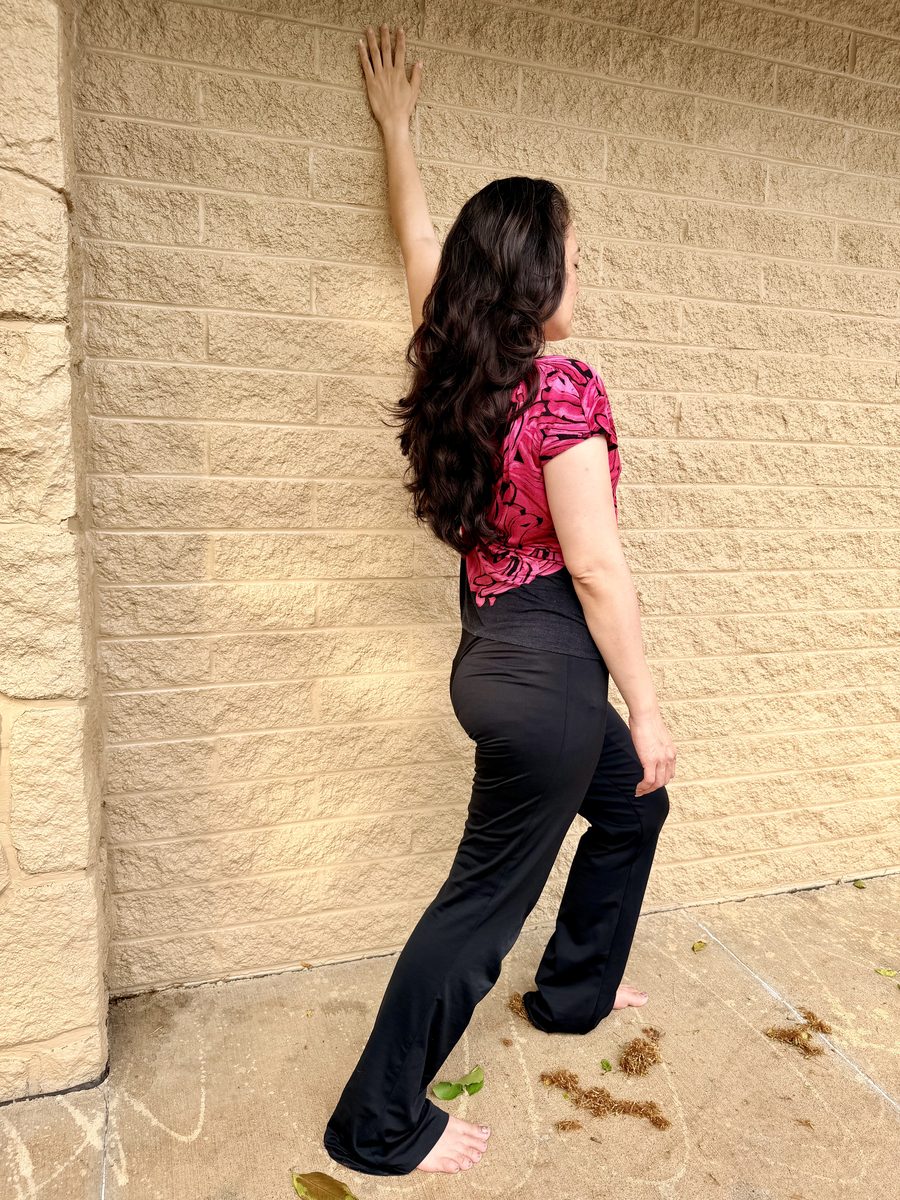
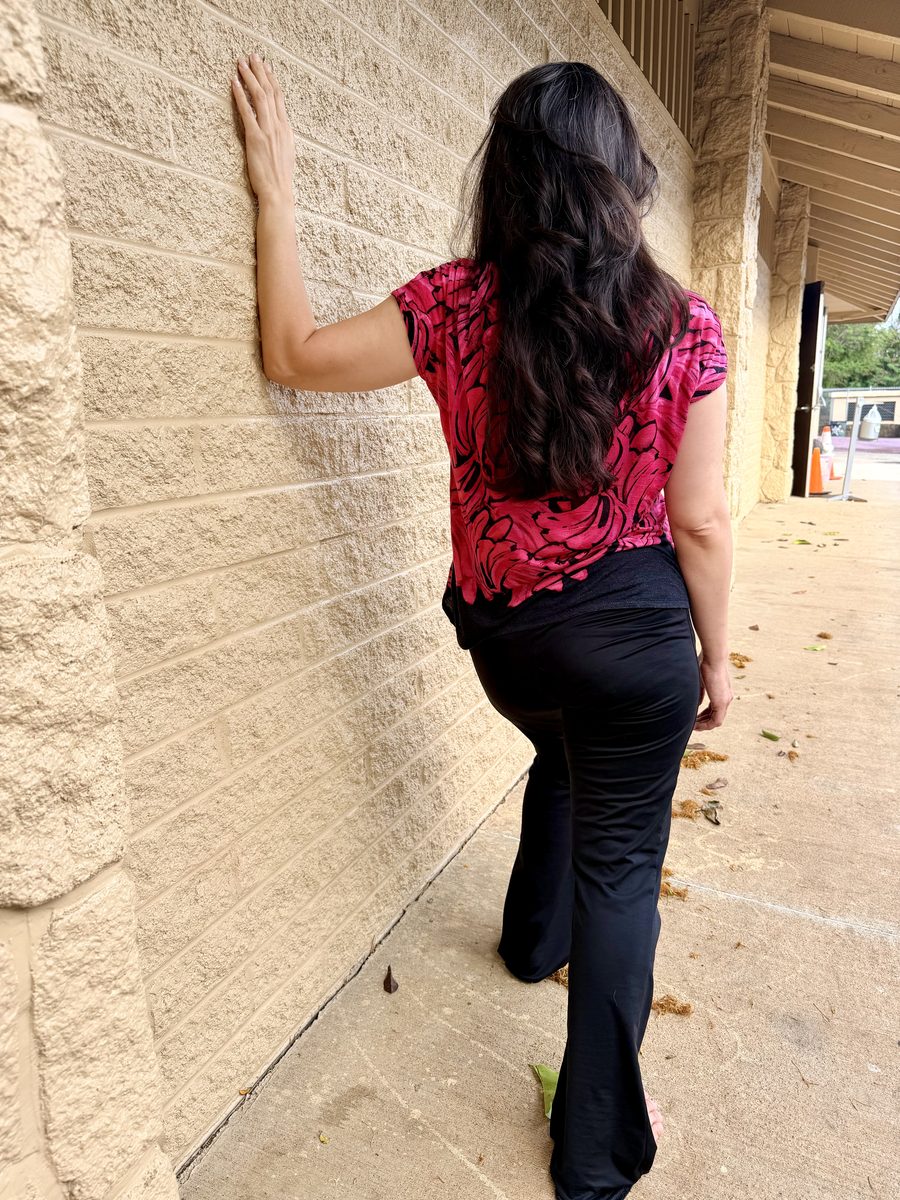
The pectoral muscle has three different fiber orientations, so a single position can't reach all of it. This stretch moves through three positions — middle, high, and low — to address each one.
Three positions, three deep breaths each. Keep your head facing forward the whole time so the stretch stays exactly where it belongs.
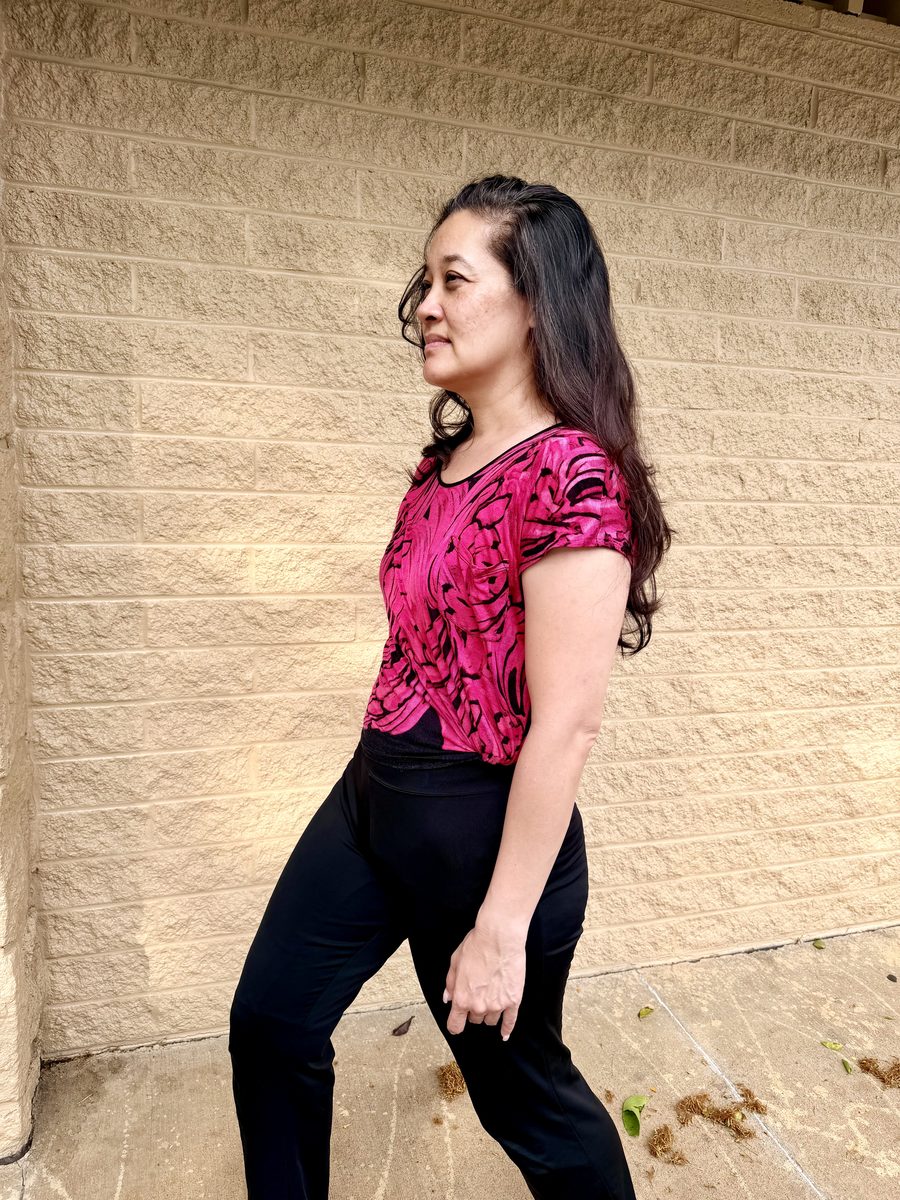
The psoas runs from your lower spine to the inside of your upper thigh. The key to this stretch is the pelvic tilt — that's what truly activates and lengthens the muscle.
The pelvic tilt is everything here. If you feel it working in your back or shoulders, ease off and refocus on tilting the pelvis itself.
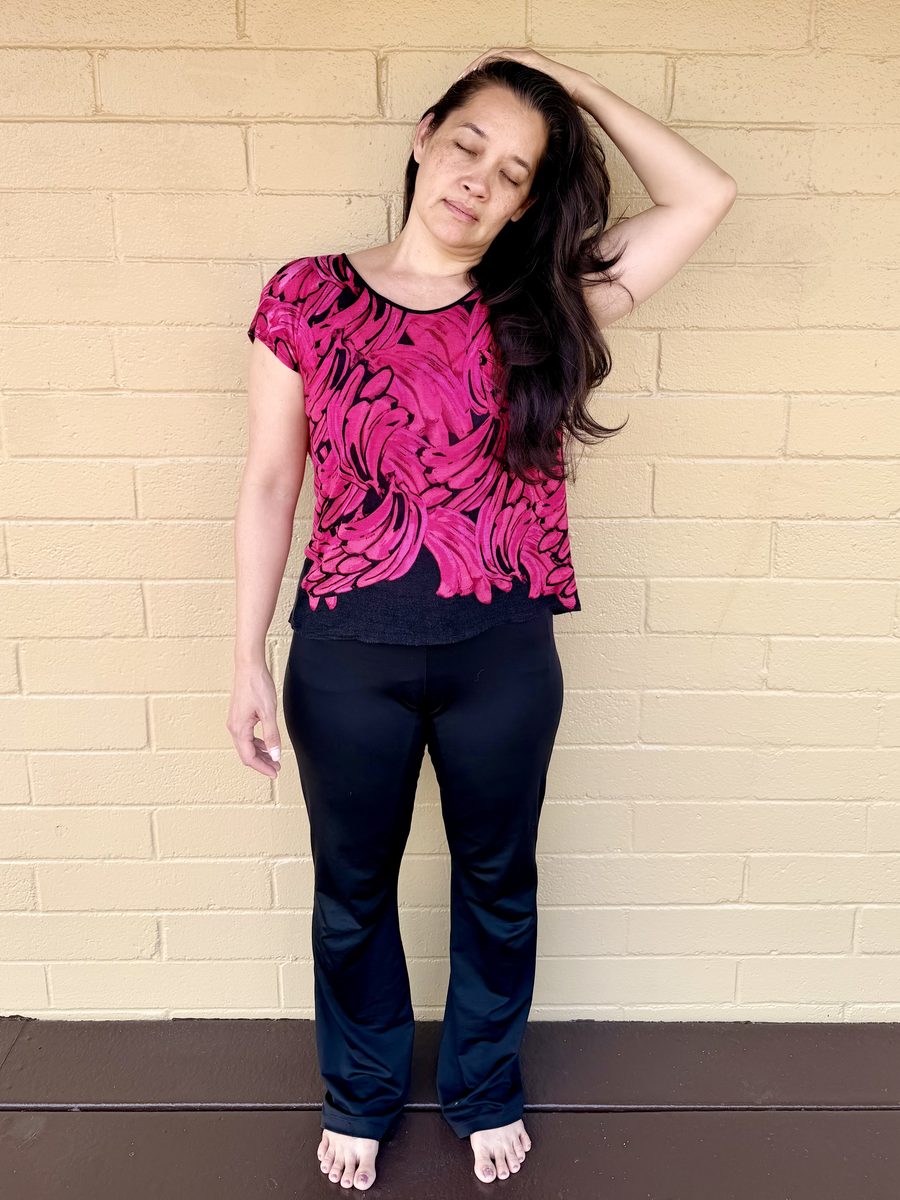
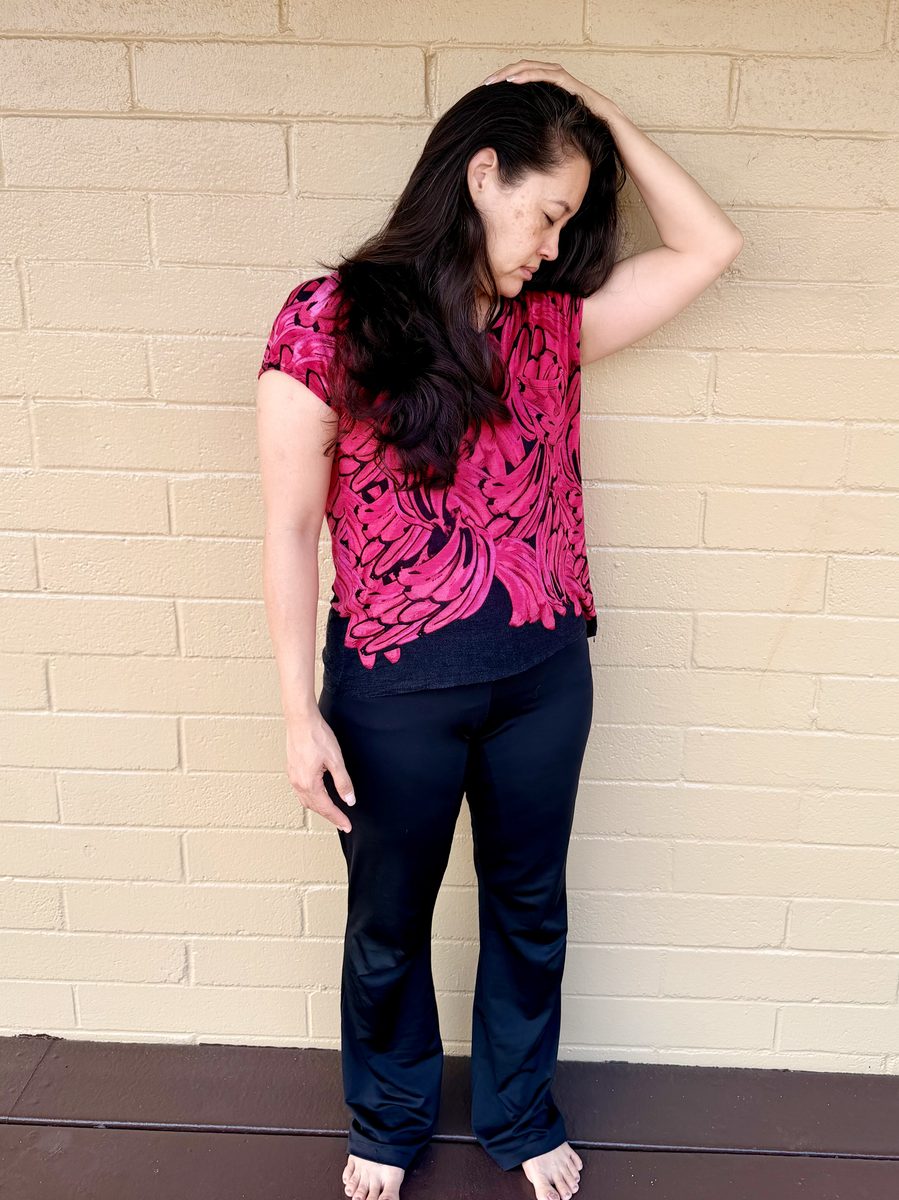
Two simple positions reach the side and front of the neck from different angles. Throughout, let gravity do the work — never pull or tug.
Always lift the hand off completely between positions, so there's a clean reset and no temptation to pull.
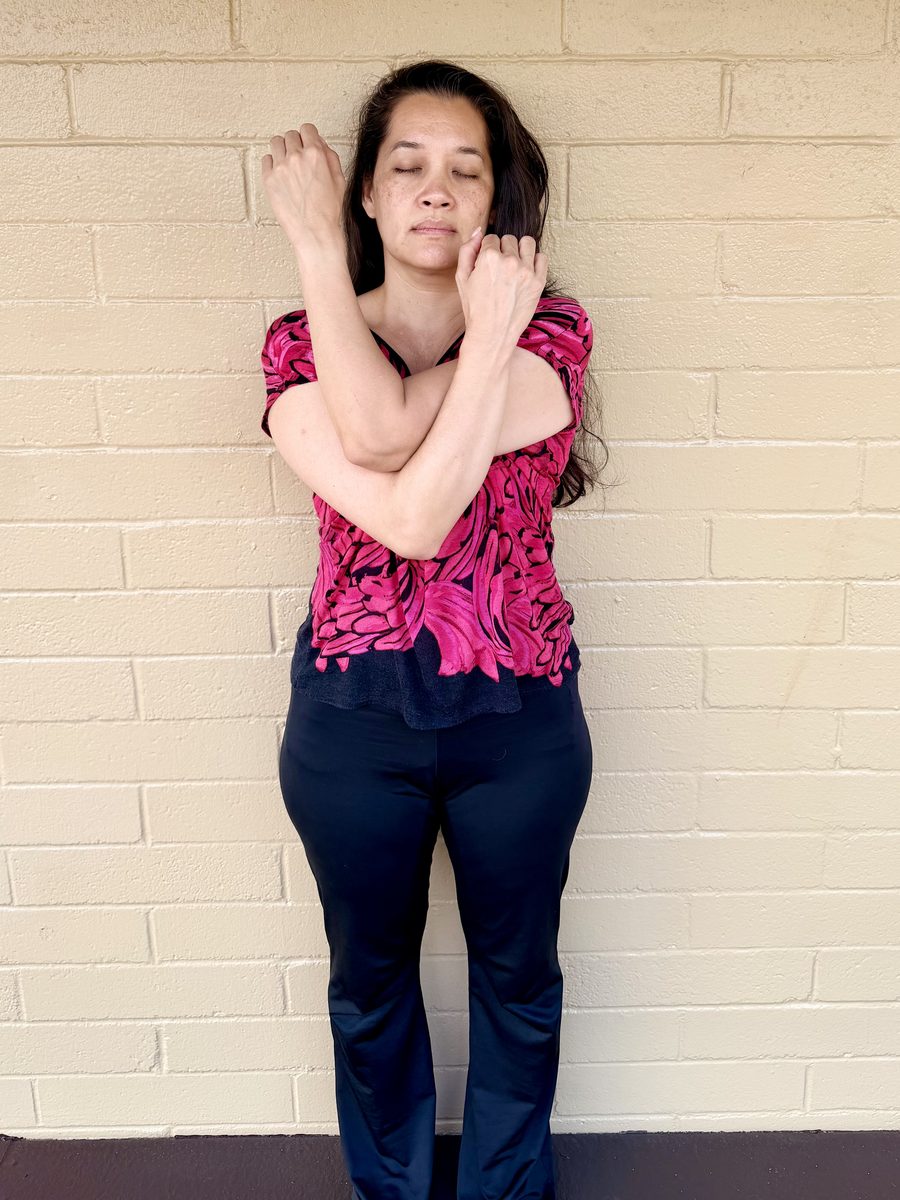
Keeping the shoulder down and aligned is what makes this stretch land where it should.
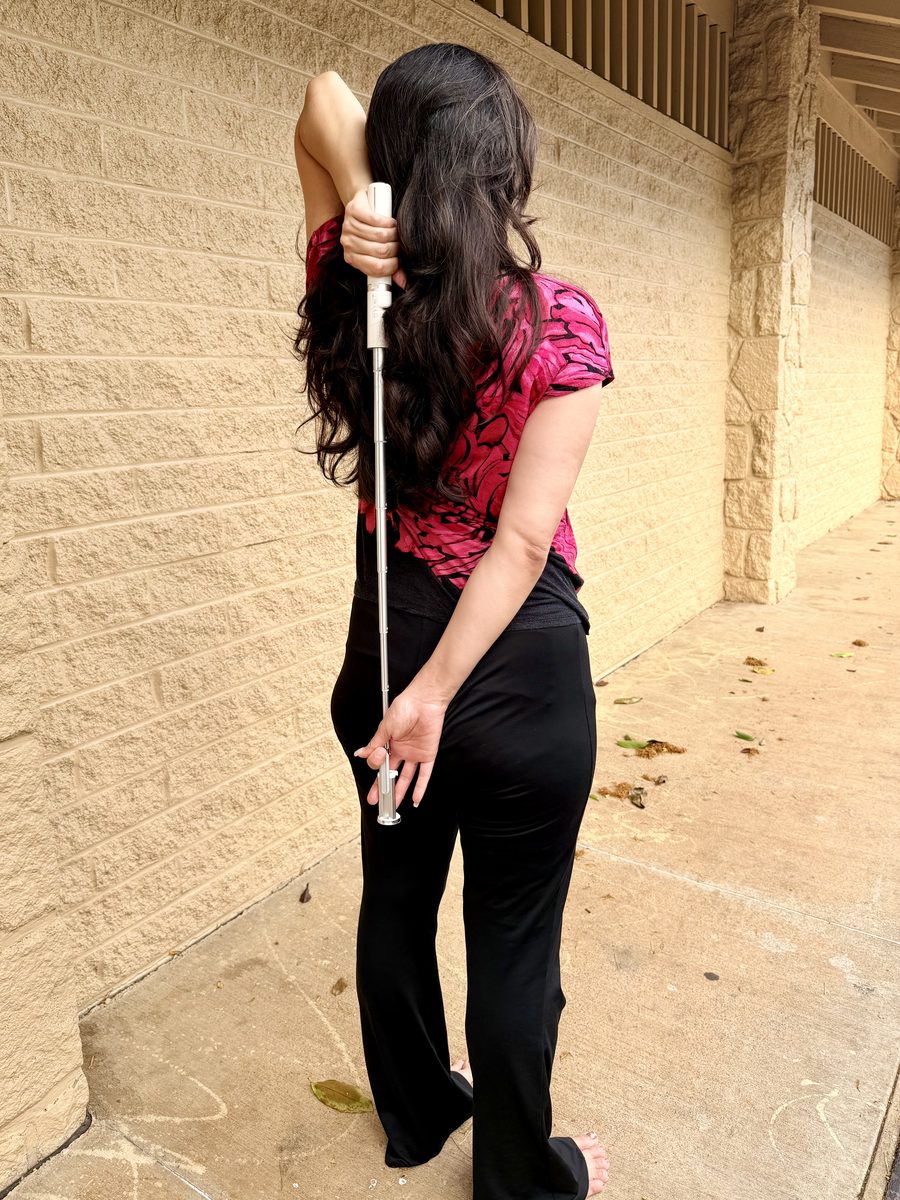
The subscapularis is a deep internal rotator that's difficult to reach any other way. You'll need a stick, wand, or broom handle.
Move gently — this is a deep muscle, and ease will reach it better than force.
A little understanding goes a long way here. Heat causes vasodilation — your blood vessels widen, bringing in the circulation and inflammatory response that the body uses to nourish and heal. Ice causes vasoconstriction — your blood vessels narrow, helping to draw that inflammation back out. Heat invites the healing response in; ice helps move it along.
It's worth knowing that inflammation isn't something to fear. Acute inflammation — the kind that rises up right after an injury, or even after bodywork — is the body's healing response, bringing circulation and repair to where it's needed. That's a good thing, and part of why some warmth or tenderness after a session is normal. What causes lasting damage and pain is chronic inflammation — the low-grade, long-standing kind that settles in and never resolves. So the goal isn't to shut inflammation down. It's to support the healthy, healing kind and help move the stuck, chronic kind along.
If you're ever unsure which to use, choose ice. Heat can sometimes accentuate an acute problem and make it worse, while ice won't aggravate an acute issue. Erring toward ice is the safer choice. Using ice after heat helps the pumping action of blood, drawing inflammation and fluids out without losing the benefit of bringing them in with heat. Ice after heat is both beneficial and recommended.
Use heat for long-standing tightness and stiffness, when you want to bring circulation and warmth into an area. Apply for about 20 minutes at a time.
Use ice to draw inflammation out. How long depends on what you're doing:
After heat — about 5 minutes, to pump inflammation
and fluids out without losing the benefit of the heat.
A longer, standalone application — 15 to 20 minutes,
always with a cloth or barrier between the ice and your skin.
A small, targeted spot — rub an ice cube directly on
the skin for about 3 minutes, keeping it moving the whole time so the
cold never settles in one place.
Space longer sessions out by an hour or two, and remove the ice sooner if the area goes numb.
Simple rules keep you safe with either: don't exceed about 20 minutes of application at a time, as going longer can risk irritating the skin, tissue, or nerves. Short and consistent always beats long and forceful. If symptoms worsen, stop use and relay that information at your next session.
Every body is different. If you're ever unsure what's right for your situation, bring it to your next session and we'll tailor the approach to you.
When you're in alignment with gravity, gravity actually gives you lift. Think of a telephone pole. A telephone pole isn't held up by the guy wires at its base — it's held up because it's set in perfect alignment with gravity. Once it's aligned, gravity itself supports it. The guy wires are only there to catch the pole if it begins to drift out of alignment.
Your muscles are those guy wires. Their job is to keep your skeleton aligned with gravity — and when you fall out of alignment, they're the ones forced to engage, strain, and hold you up. Find that stacked alignment instead: ears over shoulders, shoulders over hips, hips over ankles, feet hip-width apart. Carry that same alignment into whatever position you're in.
The same stacking applies when seated. If you're working at a computer, place a pillow under your forearms to support them and help you hold that alignment without strain.
The best alignment for sleep is on your back, with no pillow under your neck and a slight pillow under your knees to support your lower back. If you're a side sleeper and can't break the habit, use a slight pillow under your neck to keep it aligned, a pillow under your top arm so it doesn't fall forward and pull the chest and back out of place, and a slight pillow between your knees to keep your hips aligned. The key is just enough support to maintain alignment — too many pillows can create as much trouble as too few.


Many chronic holding patterns and slouching habits come from muscles that have tightened over time. As we work together to lengthen those muscles, your own awareness becomes a powerful partner to that work. Throughout your day, catch yourself in your habits — and especially notice what you do when you relax. Do your shoulders roll forward? Does your neck drift to one side? Do you tuck a leg underneath you? Those habits reveal which muscles are shortened and where the issues live.
When you notice a pattern, gently correct it. Over time, this awareness compounds the work we do together and accelerates your healing. Clients who do this simple homework see remarkable results — the small, steady act of noticing and correcting is what truly changes things. Pay attention to what you find and share it. Together, we'll keep targeting exactly what your body needs.
Our bodies hold more than physical tension. Pay attention to the patterns in your body — recurring issues, a side that always seems to give you trouble, or a problem you can trace back to roughly when it began. These patterns are clues. If you can connect a physical issue to an emotional event or a season of life, you've found something worth working through.
When you find one of those emotional links, here is a gentle practice to walk through it — both during your session, as you receive work in that area, and on your own in the weeks between:
"I'm grateful things are as good as they are, because they could always be worse. And I forgive myself for how I reacted and responded — I give myself grace for that time."
Pondering these thoughts while you receive work in a tender area can help those held places release and let go. Carry the same practice with you between sessions — offering that area time, space, and gentleness. And as new things arise in life, meet them the same way: be grateful that things are as good as they are, and give yourself the grace and compassion you need for those moments.
A warm bath is one of the simplest, most restorative things you can do for yourself. The warmth eases muscle tension, encourages circulation, and quiets the nervous system — warm water alone has been shown to lower stress and soften the body's hold on the day. A cup or two of Epsom salt makes it a deliberate ritual; a few drops of a calming essential oil like lavender deepen it further. Keep the water warm but not scalding, soak for about 15–20 minutes, and let it be quiet time — dim the lights and set the phone aside. A soak is especially lovely the evening after a session, easing the body as the work settles in. It won't resolve a deeper muscle or joint issue, so if tension keeps returning, bring it to your next session — but as a regular act of care, it's a beautiful way to keep the calm going.
The work we do together goes further when your body is well cared for from the inside. The goal here isn't a prescription — it's understanding. When you know what these practices do for your body, you can explore what works best for you.
Staying consistently hydrated supports muscle recovery, helps your tissues stay supple, and assists your body in moving inflammation and waste along. Most people benefit from steady water intake throughout the day rather than large amounts all at once.
Sleep is when your body does much of its repair work — rebuilding tissue and allowing your nervous system to reset and recover. Quality, consistent rest gives the work we do together the time and conditions it needs to take hold.
Every body carries a certain amount of oxidative stress — from alcohol, tobacco, excess sugar, and the chemicals we encounter in daily life. When your body is busy managing that load, it has less to give toward healing. Reducing that burden where and when you can — commonly through less alcohol, less tobacco, less sugar, and fewer chemical exposures — makes a real difference in how well your body recovers.
For specific nutritional guidance, we encourage you to research what suits your body, or consult a qualified nutrition professional. What's offered here is education, not prescription.
Your healing is a continuing conversation, and there's always more to explore. We're writing deeper reflections on the ideas woven through this page — here's a glimpse of what's on the way.
This page supports your healing between sessions, but it doesn't replace professional attention. If you're experiencing severe, persistent, or worsening pain — or anything that concerns you — please reach out to a healthcare provider. Listening to your body includes knowing when it needs more.
Return to this page often. Let these practices become part of the rhythm of your days — small, steady acts of care that carry the work forward between every session.
Made for you, with genuine love and care.